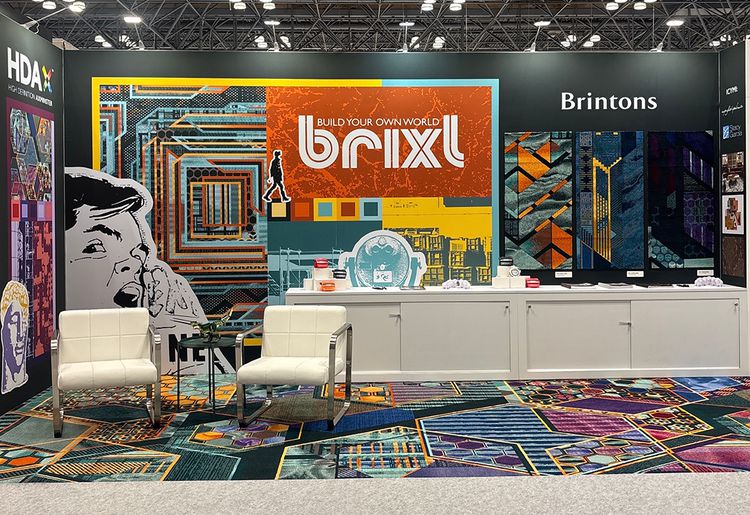
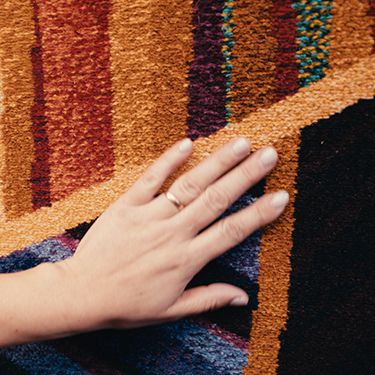
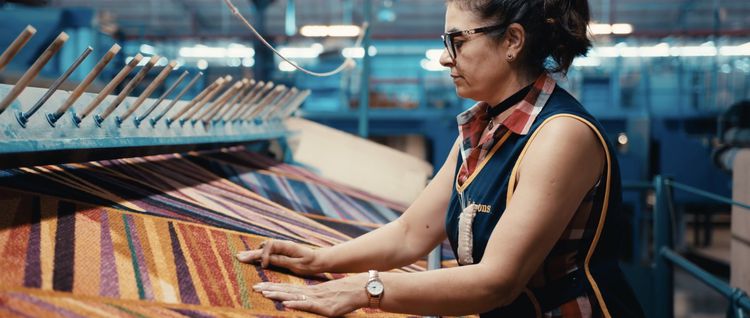
Brintons is proud to be the largest user of British wool in the world. Wool is the primary component of our products bringing a multitude of benefits and most importantly it is a sustainable, renewable material. Classed as Rapidly-Renewable, wool carpets make a significant contribution to improve indoor living standards, conservation of energy and are ecologically friendly.
Our friend and British Wool’s Director of Marketing, Graham Clark, shares more insight in a recent article from CFJ Magazine. And in case you’re wondering—no, shearing sheep for wool is not harmful to them. In fact, it’s not only beneficial for the animal, it’s essential to their health and wellbeing!
WHAT IS BRITISH WOOL?
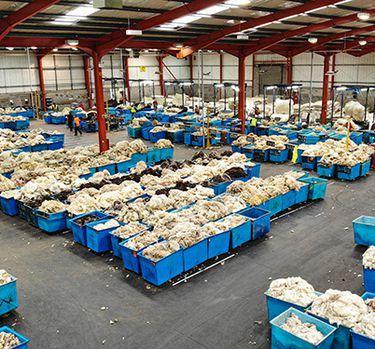
British Wool is a farmers’ co-operative set up in 1950, owned by more than 30,000 farmers across the UK. It collects, grades, and sells wool on behalf of its 30,000 members to the global wool market. The wool is sold at one of 20 auctions held each year, conducted remotely from its head office in Bradford. The wool is then processed into one of many end-products, including carpets. In fact, carpet is the largest end-product, with more than 50% of British wool used in residential and commercial markets.
The core aim of British Wool as an organization is to maximize the value of its members’ wool. Profits are paid back to the farmers, minus the operating costs of running the business. British Wool will collect any type of wool from any sized farm in the UK. Without British Wool, much of the wool in the UK would go uncollected. A glance at mainland Europe, where there is no equivalent to British Wool and the vast majority of wool goes uncollected and is simply disposed of, shows the scale of waste involved—truly a loss of an amazing natural resource.
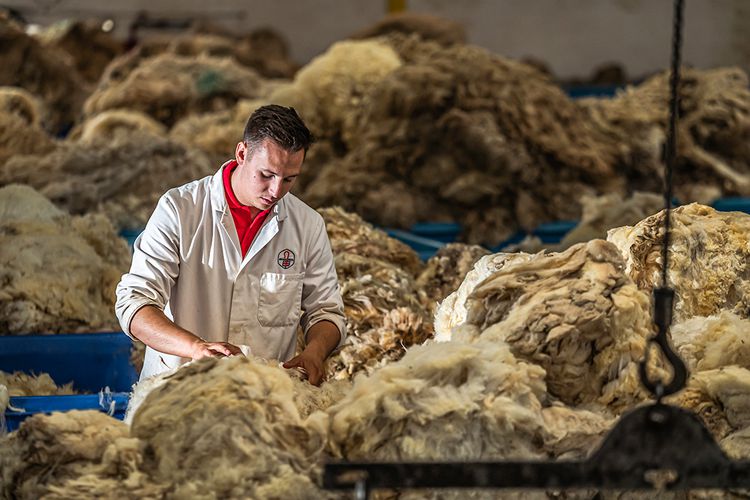
Wool in the UK is highly diverse; the country has more breeds of sheep than anywhere else in the world, with more than 60, and each breed produces different types of wool. At British Wool, highly skilled wool graders hand-grade every single fleece, looking for qualities such as fibre length, strength, colour, and uniformity within each fleece. This helps determine the end-product the wool is best suited for. This grading is one of the most important aspects of British Wool’s operations, as it allows buyers and end-brands to ensure they are using the right types of wool in their products.
BRINTONS AND BRITISH WOOL
Brintons is the largest user of British wool in the world, utilising wool from approximately 1.7 million British sheep each year. The company has incorporated high levels of British wool in all of its carpets for many years, which is one of the many reasons it has earned such an enviable reputation for quality. As expected, British Wool maintains a close relationship with the team at Brintons at every level. British wool is an inherent and crucial part of Brintons’ story, and it is essential that they are given all the support and resources needed to communicate this effectively.
A large and important part of British Wool’s role is to provide training to Brintons’ global sales teams. Over the past few years, British Wool has delivered training to their European, US, and Australasian teams. This training includes a visit to a British farm.
IS WOOL THE ULTIMATE SUSTAINABLE FIBER?
Without doubt, wool has so many inherent qualities that man-made fibres, like plastic, try and fail to imitate. Wool is one of the most sustainable fibres in the world and has been for centuries. As a natural resource, wool is renewable because sheep grow their fleece year after year, this needs to be shorn at least once a year for animal welfare reasons. Unlike synthetic fibres made from fossil fuels, wool is environmentally friendly and reduces reliance on unsustainable materials.
WHAT ARE THE ADVANTAGES OF WOOL FLOORING?
There are many advantages to wool flooring. As already mentioned, owing to its renewability wool is the truly sustainable choice for any type of flooring. The ability to spring/ bounce back is structurally built into wool fibre. If you were to try and compress a handful of wool, you would find it is impossible as its natural spring will resist. This also happens on the floor - the spongy cells and the helix (acts like a spring) push back, and this means you get less flattened fibre and distortion meaning that a wool carpet looks better for longer. You can actually bend wool fibres 20,000 times without them breaking. All wool has this quality but the fact British wool is the bulkiest wool in the world makes it the perfect choice for carpets. Wool has low flammability resisting fire and also doesn’t emit smoke or fumes.
Studies in New Zealand have shown that wool vastly improves indoor air quality by helping to remove pollutants (VOCs) and allergens from the air. Not only does wool neutralise these pollutants quicker and more completely than other flooring options, but wool also doesn’t re-emit heat. This means they continue to purify the air for up to 30 years. Finally wool absorbs noise and echo, ideal for the home and also commercial applications. Ask yourself, what other type of flooring can offer so many amazing features as wool does naturally?